

34.ª Quinzena de Dança de Almada 34th Quinzena de Dança de Almada
C-O-M: Composição – o Outro – Memória
C-O-M: Composition – the Other – Memory
C-O-M: Composição – o Outro – Memória
Particula Extravagante & Rita Vilhena
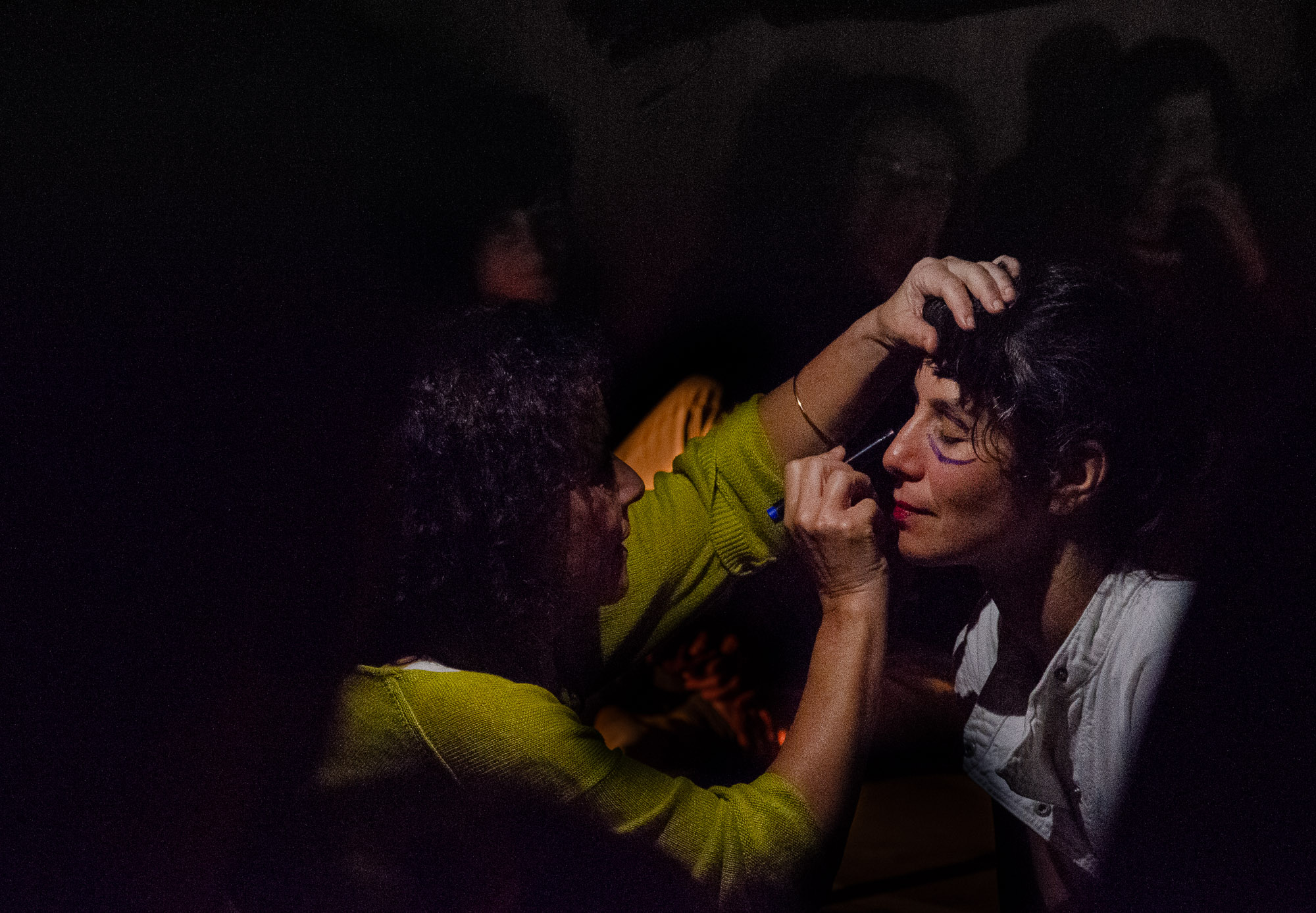
|PORTUGAL|“C-O-M: Composição – o Outro – Memória” é uma performance solo e interativa de Rita Vilhena que aprofunda a investigação iniciada em Raio de Ti / Multirising the Other in I (2023). Se antes o foco era autobiográfico, agora pergunta-se: pode a história do outro ser incorporada e transformada em ritual?
Em cena, a intérprete acolhe narrativas do público e converte-as em movimento e presença, criando um espaço de troca onde as fronteiras entre ver e fazer se tornam permeáveis. Um ritual íntimo e coletivo de escuta e transformação.
“C-O-M: Composition – the Other – Memory” is a solo, interactive performance by Rita Vilhena that builds on the exploration begun in “Raio de Ti / Multirising the Other in I” (2023). Whereas the focus was previously autobiographical, the question now is: can the story of the other be embodied and transformed into a ritual?
On stage, the performer draws on narratives from the audience and transforms them into movement and presence, creating a space for exchange where the boundaries between watching and participating become permeable. An intimate and collective ritual of listening and transformation.
Ficha Artística Artistic Credits
Vídeo Promocional Promotional Video
Ver vídeo / Watch videoINFO & BILHETES / TICKETS
Free entry
sujeita à lotação do espaço
subject to venue capacity
exterior.producao@cdanca-almada.pt
Biografias Biographies
Rita Vilhena
Ao longo do seu percurso desde 2003, Rita Vilhena, intérprete, coreógrafa e investigadora, interroga a condição político-social a partir da qual cria, nomeadamente enquanto mulher branca europeia em posição de privilégio.
Reinscreve a improvisação como prática de atenção ao presente e ao outro, tornando-a ferramenta de escuta, relação e intervenção social. Expandir o universo sensível e empático é o seu modus operandi.
Fundadora da Baila Louca (2005, Roterdão), colaborou com artistas como Meg Stuart e Keren Levi e criou peças internacionais como Raio de Ti/Multirising the Other in I (2023), Fénix (2022) e Corpo Santo (2018).
Throughout her career since 2003, Rita Vilhena – a performer, choreographer and researcher – has examined the political and social context from which she creates, particularly as a white European woman in a position of privilege.
She redefines improvisation as a practice of attentiveness to the present and to others, transforming it into a tool for listening, connection and social intervention. Expanding the realm of sensitivity and empathy is her modus operandi.
Founder of Baila Louca (2005, Rotterdam), she has collaborated with artists such as Meg Stuart and Keren Levi and created international works including Raio de Ti/Multirising the Other in I (2023), Fénix (2022) and Corpo Santo (2018).
Partícula Extravagante
Partícula Extravagante, fundada em 2017 em Lisboa, é uma associação sem fins lucrativos dedicada à criação e investigação nas artes cénicas, dirigida por Rita Vilhena.
Promove diversidade artística combinando expressão coreográfica, teatral, performativa e audiovisual, explorando responsabilidade cultural, trans-humanismo e práticas poéticas.
Apresentou projetos nacionais e internacionais, como Raio de Ti (2023), Fénix (2022) e Corpo Santo (2018), ações de formação e festivais. Apoiada frequentemente pela DGARTES, visa criar continuidade artística, aproximando o público de temas urgentes como género e crise climática.
Partícula Extravagante, founded in 2017 in Lisbon, is a non-profit organisation dedicated to creation and research in the performing arts, directed by Rita Vilhena.
It promotes artistic diversity by combining choreographic, theatrical, performative and audiovisual expression, exploring cultural responsibility, transhumanism and poetic practices.
It has presented national and international projects, such as Raio de Ti (2023), Fénix (2022) and Corpo Santo (2018), as well as training initiatives and festivals. Frequently supported by DGARTES, it aims to foster artistic continuity, engaging audiences with pressing issues such as gender and the climate crisis.